 5common causes of procurement delays in vessel operations
 6ways predictive RFQ generation reduces delays
 8stages from procurement data to delivery tracking
 7KPIs to measure the impact of predictive RFQs
In the maritime industry, procurement delays can affect far more than purchasing schedules. A missing spare part, a delayed supplier quotation, or a delivery that fails to arrive before a vessel’s scheduled port call can disrupt maintenance activities, increase operational costs, and affect vessel availability. Unlike conventional purchasing, maritime procurement operates within strict time constraints. Vessels move between ports, maintenance schedules must be coordinated with voyages, and essential stores and spare parts must be available when and where they are needed.
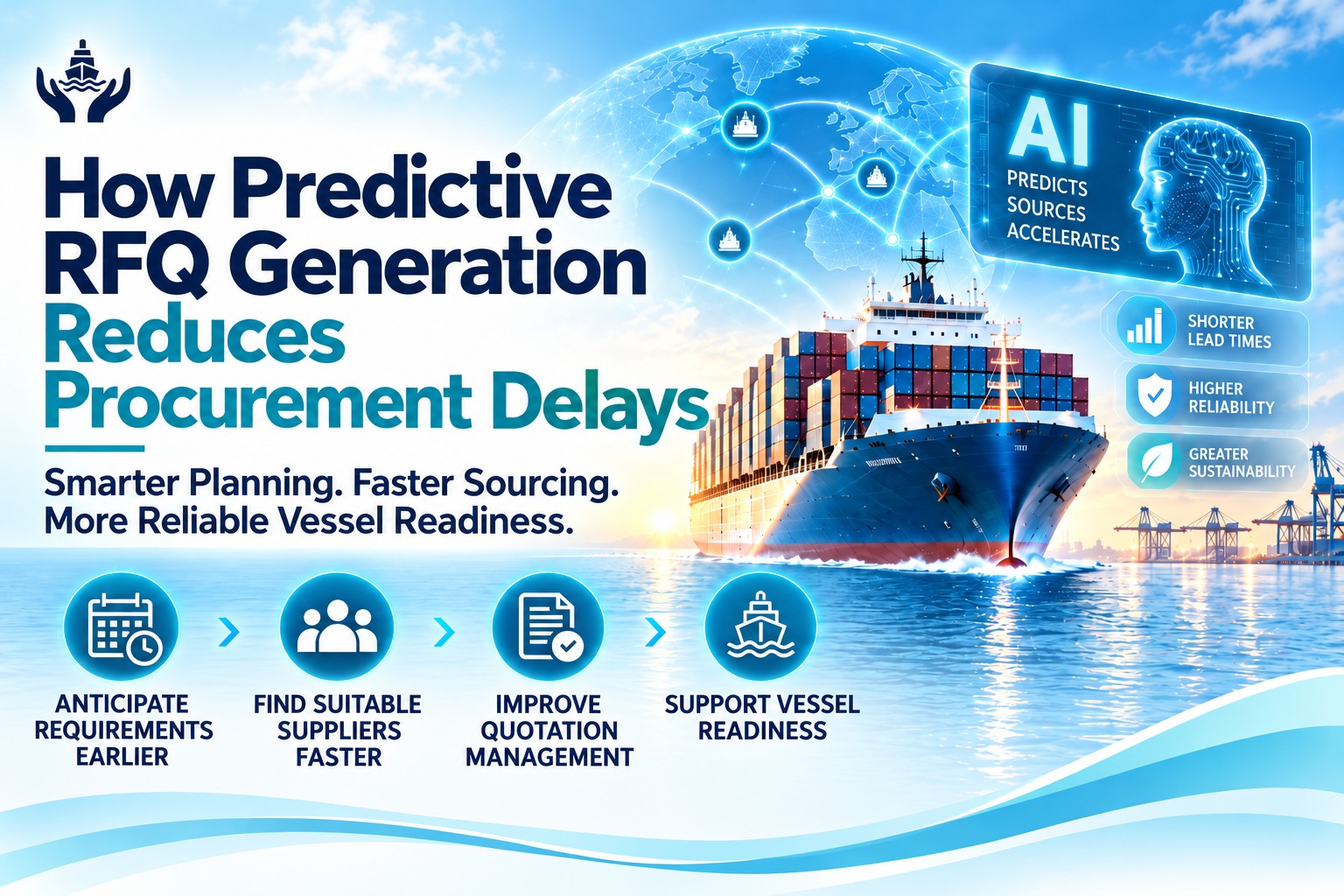
Predictive Request for Quotation (RFQ) generation offers a proactive approach to addressing these challenges. By analysing historical purchasing patterns, inventory information, maintenance schedules, and operational requirements, procurement teams can identify potential needs earlier and prepare RFQs before a requirement becomes urgent. When supported by digital procurement platforms such as the Varuna Sentinels Maritime Procurement System (VSMPS), this approach can help streamline supplier sourcing, reduce administrative work, improve quotation management, and support more reliable vessel operations.