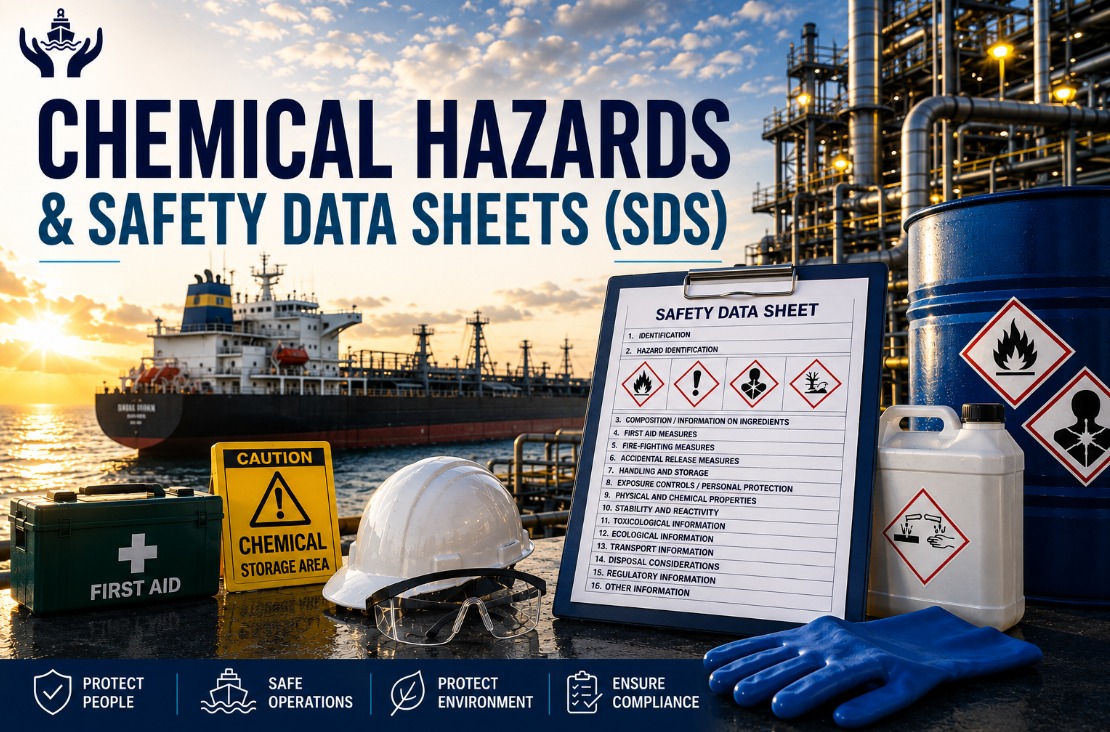
Chemical Hazards and Safety Data Sheets (SDS): The Foundation of Safe Maritime Operations

Every day, ships use hundreds of chemical products — from fuel additives and lubricants to cleaning agents, paints and refrigerants. Managed poorly, they threaten crew safety, vessel integrity and the marine environment.

Discover how effective chemical hazard management and accurate Safety Data Sheets (SDS) keep maritime operations safe, compliant and sustainable — with Varuna Sentinels BV.

Why Chemical Hazard Management Matters

From fuel additives and lubricants to cleaning agents, paints, coatings, refrigerants and cargo-related chemicals, these substances are essential to the maritime industry. Yet chemical incidents at sea can have severe consequences — toxic vapours, accidental spills, fires from flammable substances and improper waste disposal can cause injuries, operational delays, environmental damage and regulatory penalties.

Chemical hazards are often underestimated because many hazardous substances are used routinely onboard, leading to familiarity and reduced risk awareness. A single chemical can present multiple hazards at once — a cleaning solvent may be highly flammable, harmful if inhaled, and dangerous to aquatic life if released into the sea. Without proper awareness, even a minor incident can quickly escalate into a major safety concern.

Effective chemical hazard management helps organizations:

  • Protect crew members from injuries and occupational illnesses
  • Prevent fires, explosions and equipment damage
  • Minimize environmental pollution
  • Ensure compliance with international regulations
  • Improve emergency preparedness and response capabilities
  • Reduce operational and financial risks

More than health and safety: In today’s regulatory environment, chemical safety is no longer just a health and safety issue — it is a critical component of Environmental, Social and Governance (ESG) performance.

Understanding Safety Data Sheets (SDS)

A Safety Data Sheet (SDS) is the primary source of information for understanding the risks associated with a chemical product. It provides detailed guidance on the chemical’s properties, hazards, safe handling procedures, emergency response measures, storage requirements and disposal methods. An SDS acts as a bridge between chemical manufacturers and end users, ensuring everyone involved in handling a chemical understands the associated risks and necessary precautions.

For crew members onboard a vessel, an SDS is often the first document consulted when:

  • A chemical spill occurs
  • A crew member is exposed to a hazardous substance
  • New chemicals are introduced onboard
  • Storage arrangements are reviewed
  • Emergency response actions are required

Why it matters: Without access to accurate SDS documentation, responding effectively to an incident becomes significantly more difficult.

Common Chemical Hazards Found Onboard Ships

Modern vessels carry a wide variety of hazardous substances. Understanding these hazards is the first step toward establishing effective control measures. Some of the most common include:

Flammable Chemicals

Products such as paints, thinners, solvents and fuel additives can ignite easily if exposed to sparks, heat or open flames. Poor storage practices significantly increase the risk of onboard fires.

Corrosive Substances

Strong acids and alkaline cleaning agents can cause severe burns to skin and eyes. They can also damage vessel equipment and structural components if improperly handled.

Toxic Chemicals

Certain chemicals release harmful vapours or gases that can affect the respiratory system, nervous system or internal organs. Exposure may occur through inhalation, ingestion or skin absorption.

Pressurized Gases

Refrigerants and compressed gases can become dangerous if containers are damaged or exposed to extreme temperatures.

Marine Pollutants

Some chemicals may pose limited risks to humans but can have devastating effects on marine ecosystems if released into the ocean.

The Role of SDS in Emergency Situations

During a chemical incident, every minute matters. The SDS provides critical information that allows crew members and emergency responders to act quickly and correctly. For example, if a crew member accidentally splashes a corrosive chemical into their eyes, the SDS immediately identifies:

  • Appropriate first-aid procedures
  • Required flushing duration
  • Symptoms to monitor
  • Medical treatment recommendations

Fire response: If a fire involves hazardous chemicals, the SDS specifies which extinguishing agents should be used and which should be avoided — significantly reducing the severity of injuries and preventing further escalation of an incident.

Regulatory Expectations for Chemical Safety

International regulations increasingly emphasize proper chemical management and hazard communication. Organizations are expected to:

  • Maintain up-to-date SDS documentation
  • Ensure chemical inventories are accurate
  • Provide hazard awareness training
  • Implement safe handling procedures
  • Maintain appropriate storage arrangements
  • Establish emergency response protocols

The stakes: Failure to meet these expectations can result in inspection findings, non-conformities, fines, reputational damage and increased operational risk. For shipping companies, maintaining effective SDS management systems demonstrates a commitment to safety, compliance and environmental responsibility.

Best Practices for Managing Chemicals Onboard

Successful chemical management goes beyond simply collecting SDS documents. Five practices make the difference:

Maintain an Accurate Chemical Inventory

Every chemical onboard should be recorded and linked to a current SDS. Regular reviews help identify obsolete products and missing documentation.

Ensure Easy Access to SDS

Crew members should be able to access SDS information quickly during normal operations and emergencies. Digital systems are increasingly used to improve accessibility.

Train Personnel Regularly

Chemical safety awareness should form part of ongoing crew training. Personnel must understand hazard labels, SDS content, PPE requirements and emergency response procedures.

Verify Supplier Documentation

Not all SDS documents are current or compliant with the latest standards. Regular verification ensures information remains accurate and reliable.

Review Chemical Risks Periodically

Risk assessments should be conducted whenever new chemicals are introduced or operational processes change.

Chemical Safety and ESG Performance

Chemical management is becoming an increasingly important aspect of maritime ESG strategies. Investors, charterers, regulators and stakeholders are placing greater emphasis on environmental protection and responsible operations. Organizations with strong chemical management practices can:

  • Reduce environmental incidents
  • Improve workplace safety performance
  • Demonstrate regulatory compliance
  • Strengthen stakeholder confidence
  • Support sustainability objectives

Business resilience: Proper SDS management is not only a safety requirement but also a valuable contributor to long-term business resilience.

How Varuna Sentinels B.V. Supports the Maritime Industry

At Varuna Sentinels B.V., we recognize that effective chemical management requires more than documentation — it requires a structured approach to compliance, risk reduction and operational excellence. Our support includes:

  • Chemical inventory management
  • SDS collection, verification and maintenance
  • Hazardous material documentation support
  • Compliance and audit readiness assistance
  • Maritime ESG support services
  • Ongoing guidance for safe chemical management practices

The outcome: By helping vessel owners and operators maintain accurate hazardous substance records and accessible SDS documentation, we contribute to safer vessels, stronger compliance performance and more sustainable maritime operations.

Conclusion

Chemical hazards are an unavoidable part of maritime operations, but their risks can be effectively controlled through awareness, preparation and proper documentation. Safety Data Sheets provide the essential information needed to handle chemicals safely, respond to emergencies and comply with regulatory requirements.

As the maritime industry continues to prioritize safety, sustainability and compliance, robust chemical hazard management will remain a fundamental element of responsible vessel operations. Organizations that invest in effective SDS management not only protect their people and the environment but also strengthen operational efficiency and long-term business performance.

A critical foundation: In an industry where a single chemical incident can impact people, assets and the environment, proactive SDS management serves as a critical foundation for safe, compliant and sustainable maritime operations.

Contact Us

Want to strengthen chemical safety and SDS management across your fleet? Our experts at Varuna Sentinels BV are here to help you build accurate hazardous substance records and audit-ready documentation.

Reach out to us at contact@varuna-sentinels.com or call us at +31 20 24 0355

Visit our website: www.varuna-sentinels.com

Share this article

LinkedIn Twitter Email

Related Articles

What is IHM (Inventory of Hazardous Materials)?

Read More

Common Errors in IHM Part I Maintenance and How to Avoid Them

Read More

Shipyard HazMat: Managing Hazardous Materials Safely

Read More

Ready to strengthen chemical safety across your fleet?

Schedule a Meeting Contact Us