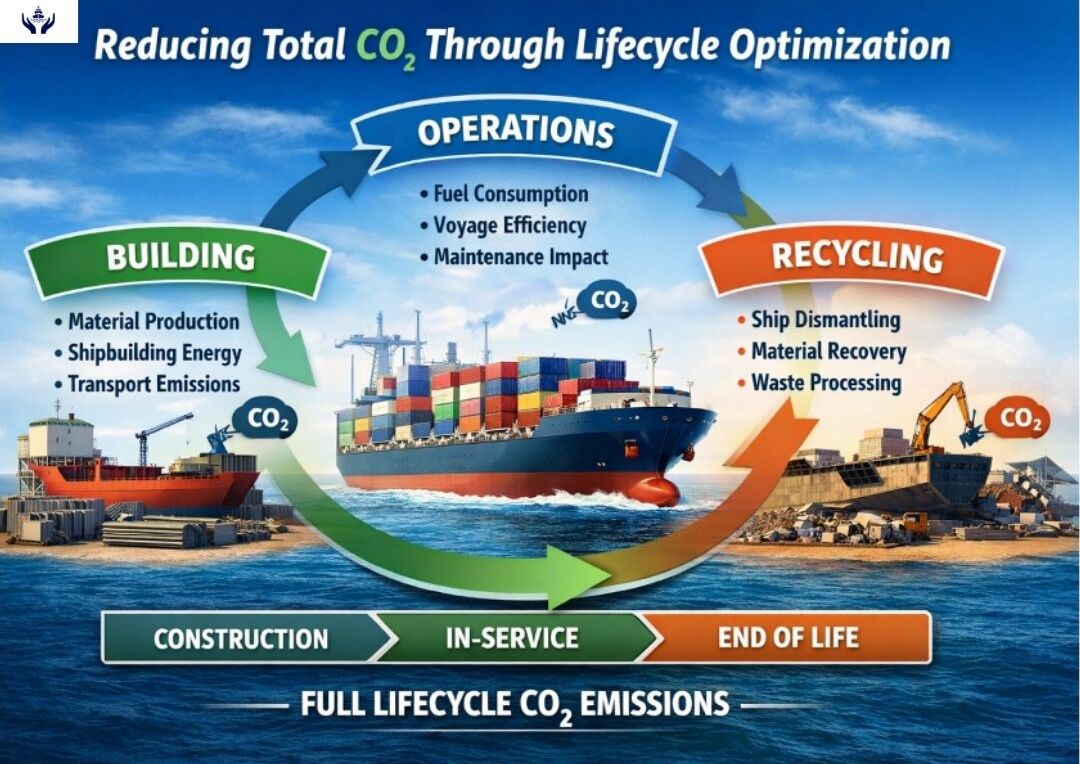
Reducing Total CO₂ Through Lifecycle Optimization

A Strategic Advantage for Shipowners

The shipping industry is entering an era where sustainability isn't optional—it's a business imperative. Varuna Sentinels provides a comprehensive Life Cycle Assessment (LCA) framework, measuring total CO₂ emissions from ship construction, operations, and recycling.

Why LCA Matters in Today's Sustainability-Driven World

Shipping contributes significantly to global greenhouse gas emissions. Traditional metrics often focus only on fuel consumption during operations, overlooking **emissions embedded in construction materials or end-of-life recycling**.

LCA changes that by providing a **cradle-to-grave view** of a ship's carbon footprint. For shipowners, this is not just about environmental responsibility --- it's about **informed investment, operational efficiency, and long-term value creation**.

Key Stages of LCA: Cradle-to-Grave Explained

Varuna Sentinels evaluates emissions at every stage of a ship's life:

1. Construction

  • Steel, aluminum, composites, and shipyard energy use contribute significantly to a vessel's early carbon footprint.

2. Operations

  • Fuel consumption, engine efficiency, maintenance, and routing strategies are quantified to reveal operational hotspots.

3. Recycling / End-of-Life

  • CO₂ from dismantling, material recovery, and disposal is included, enabling circular economy strategies.

By combining these stages, we provide a **total lifecycle CO₂ figure**, empowering shipowners to make data-driven decisions for sustainability and cost reduction.

How LCA Supports Green Ship Design and Fuel Selection

Optimizing a ship for low-carbon operations starts before it ever sails. LCA insights enable owners to:

  • Choose **low-carbon or recycled materials** during construction
  • Select **fuel options with lower lifecycle GHG intensity** (biofuels, LNG, ammonia, e-fuels)

This ensures vessels are **built and operated efficiently**, reducing emissions over decades of service.

LCA in Ship Recycling -- Ensuring Sustainable End-of-Life

End-of-life management is often overlooked, yet it can significantly influence a ship's **overall environmental impact**. LCA allows owners to:

  • Maximize **material recovery** (steel, aluminum, electronics)
  • Minimize emissions from dismantling processes
  • Partner with responsible recycling yards to ensure **compliance and ESG credibility**

How LCA Supports IMO and EU Sustainability Regulations

Regulatory compliance is no longer optional. LCA aligns ship operations with:

  • **IMO GHG Strategy** -- supporting decarbonization targets through lifecycle emission insights
  • **EU MRV / ETS** -- providing accurate CO₂ data for monitoring, reporting, and emissions trading

This means owners and operators can **demonstrate compliance while optimizing operations**.

LCA's Role in ESG Reporting and CSRD Compliance

Investors and stakeholders now demand transparency. Our lifecycle CO₂ assessments feed directly into **ESG reporting**, helping companies meet **CSRD and sustainability disclosure obligations**. LCA demonstrates **accountability and leadership**, enhancing credibility and investor confidence.

CBAM and LCA -- Connecting International Trade and Carbon Management

The EU's **Carbon Border Adjustment Mechanism (CBAM)** underscores the importance of embedded emissions. LCA equips shipowners to:

  • Calculate the **true carbon intensity of their vessels**
  • Identify risks and opportunities in **international trade**
  • Make **strategic, low-carbon operational decisions**

Using LCA to Reduce Costs and Environmental Impact

LCA isn't just about compliance --- it identifies **high-impact interventions** that save money:

  • **Fuel efficiency improvements** reduce operational costs
  • **Material optimization** lowers construction expenses
  • **Recycling strategies** generate value and reduce waste management costs

The result is a **ship that is both profitable and sustainable**.

LCA for Circular Economy and Sustainable Supply Chains

By integrating LCA, shipowners can design vessels that **support circular economy principles**:

  • Reusable and recyclable materials
  • Design-for-disassembly strategies
  • Reduced total lifecycle emissions

This strengthens supply chain sustainability and positions companies as **leaders in low-carbon maritime innovation**.

Conclusion

For shipowners and fleet managers, **LCA is no longer optional --- it's a strategic advantage**. By understanding total CO₂ emissions across construction, operations, and recycling, Varuna Sentinels empowers clients to **optimize ships for sustainability, compliance, and financial performance**.

Investing in lifecycle optimization today ensures **lower costs, regulatory alignment, and competitive advantage** tomorrow.

Explore Varuna Sentinels Solutions:

Contact Us

Need help with lifecycle CO₂ optimization or have questions about LCA for your fleet? Our experts are here to assist you.

Reach out to Varuna Sentinels BV at contact@varuna-sentinels.com or visit our website www.varuna-sentinels.com

Share this article

LinkedIn Twitter Email

Related Articles

Varuna Sentinels BV

Read More

Varuna Sentinels BV

Read More

SASB Standards for Maritime ESG

Read More

Ready to simplify your maritime compliance?

Schedule a Meeting Contact Us